27 Nov,2026 UTC+8 Views:
Rotary kilns are the core thermal equipment used for continuous high-temperature calcination in industrial production, and they are widely applied in building materials, metallurgy, chemical processing and solid-waste treatment. The new dry process rotary kiln is the mainstream choice in modern calcination thanks to its mature technology and significant energy-saving advantages. If you are planning a new project, it is important to understand the different kiln types, process routes and selection criteria. This guide covers the definition, structure, working principle, applications and key selection points of rotary kilns, giving project owners a clear reference for equipment and production-line configuration.
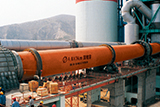
A rotary kiln is a long, slightly inclined cylindrical vessel lined internally with refractory bricks. Supported by roller stations and driven by a gear-and-pinion system, the shell rotates slowly. Feed enters at the elevated tail (feed) end, tumbles and advances through the kiln, and undergoes drying, decomposition, calcination and sintering before discharging at the lower head (discharge) end. Based on the process route, rotary kilns are generally classified into wet-process, semi-dry-process and new dry-process (precalciner) rotary kilns.
Compared with a traditional wet-process kiln, a new dry process rotary kiln is equipped with a suspension preheater and a calciner. Raw meal is heated and partially calcined in the preheater before entering the kiln, which greatly reduces the thermal load inside the shell and improves thermal efficiency. It is the preferred calcination equipment for large cement clinker and active lime production lines. With decades of experience in large kiln and mill equipment manufacturing, CHAENG (Xinxiang Great Wall Machinery Co., Ltd.) can customize new dry process rotary kilns in various specifications for cement, lime and metallurgical calcination projects, and also provide complete production-line EPC services.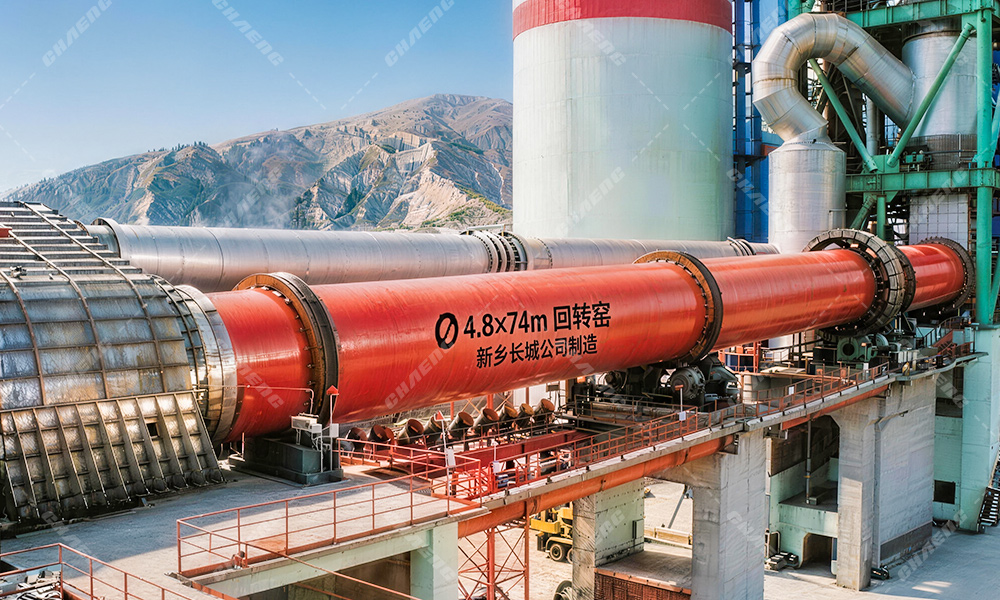
A complete new dry process rotary kiln system is more than a single shell; it consists of the main kiln and a set of supporting thermal units:
1. Kiln shell: Made of high-quality steel plates by rolling and welding, the shell is lined with different refractory bricks according to each calcination zone to resist high-temperature corrosion. A 3.5%–4% inclination is set to keep material moving steadily toward the discharge end.
2. Support and thrust roller assembly: Including support rollers, kiln tyres (riding rings) and hydraulic thrust rollers, this assembly carries the weight of the whole kiln and controls axial shell drift for long-term stable operation. CHAENG support rollers and kiln tyres are made of alloy cast steel for better wear resistance and a longer service life.
3. Drive system: Main motor + hardened-tooth reducer + girth gear drive, with variable-frequency speed control for precise kiln speed adjustment and control of material residence time. An auxiliary drive is also provided for maintenance and barring.
4. Sealing device: Flexible scale-type seals at the kiln head and kiln tail reduce air and material leakage and heat loss, making them key components for energy-efficient kiln operation.
5. Auxiliary thermal system: Suspension preheater, calciner, burner, cooler and exhaust gas treatment system — also signature configurations of the modern rotary kiln process.
A new dry process rotary kiln uses counter-current gas–solid heat exchange. The whole calcination process is divided into four stages: preheating and decomposition, transition, burning (clinkering) and cooling. Pre-treated dry raw meal is fed from the kiln tail into the preheater, where it is rapidly heated through direct contact with hot gas; most of the calcium carbonate is decomposed in the calciner, and the pre-calcined material then enters the kiln shell. As the shell keeps rotating slowly, the material tumbles and mixes while moving gradually toward the kiln head along the inclined shell. Fuel is injected and burned by the head burner, generating high-temperature gas of 1,400–1,450 °C. The gas flows counter-current to the material and transfers heat continuously; solid-state reactions and liquid-phase sintering are completed in the burning zone, forming qualified clinker. The calcined clinker falls from the kiln head into the cooler for rapid cooling, while the exhaust gas passes through the calciner and preheater for heat recovery before entering the dust-removal system and being discharged in compliance with emission standards.
Compared with older wet-process rotary kilns, the new dry process rotary kiln moves the decomposition stage to the calciner, reducing the calcination load inside the kiln. It delivers lower heat consumption, higher single-line capacity and a higher level of automation, making product quality easier to control consistently — which is why it is the calcination route promoted across the building materials industry in China.
4.1 Building materials (core application)
Building materials is the largest application field for new dry process rotary kilns. First, cement clinker calcination: nearly all large cement production lines use new dry process rotary kilns, supporting capacities of 1,000–5,000 tons of clinker per day. Second, active lime calcination: rotary kilns produce lime with high reactivity and low rates of under-burning and over-burning, widely used in steelmaking, calcium carbide and flue-gas desulfurization projects. CHAENG can supply complete new dry process rotary kiln projects for active lime with capacities of 200–1,000 tpd.
4.2 Metallurgical industry
Metallurgical rotary kilns are used for roasting, magnetizing roasting and dehydration calcination of minerals such as iron ore, bauxite, magnesite and zinc oxide ore. They handle a wide range of ferrous and non-ferrous metallurgical raw materials. The stable temperature field of a rotary kiln ensures mineral roasting conversion rates and improves the recovery rate in downstream mineral processing.
4.3 Chemical industry
Rotary kilns are used for calcination and modification of non-metallic minerals such as kaolin, barite, phosphogypsum and bentonite, achieving crystal transformation, dehydration and purification, and improving powder whiteness and activity. Many powder processing plants combine a ball mill with a rotary kiln to form a complete grinding and calcination line.
4.4 Solid waste resource recovery
Thanks to stable high-temperature operation, rotary kilns can co-process sludge, hazardous waste and steel slag. Harmful components are decomposed at high temperature, enabling resource recovery of solid waste in line with current environmental policies.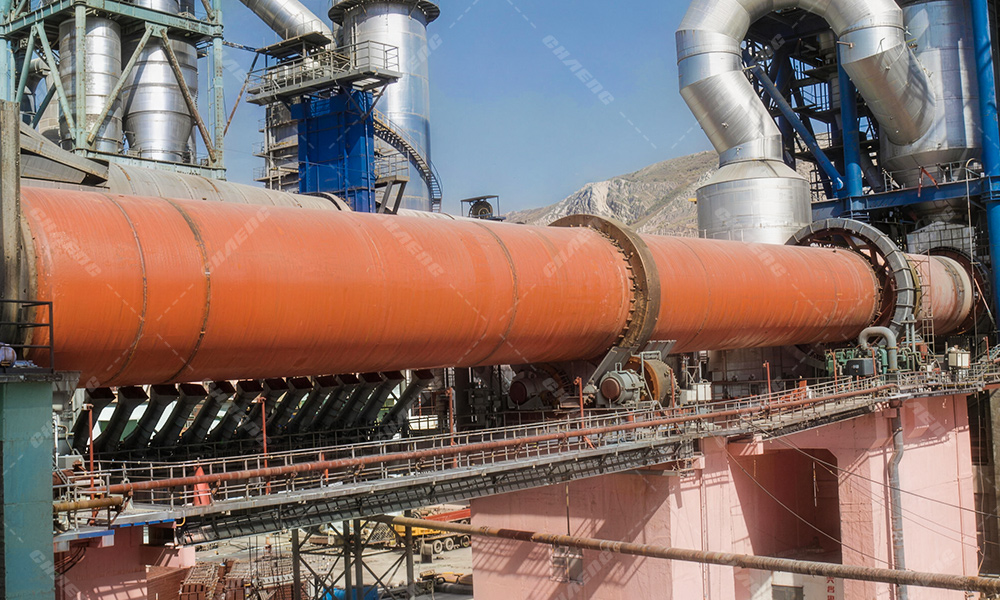
1. Match your capacity plan: The specification of a new dry process rotary kiln is determined by daily production capacity. Small lime lines usually use shells of Φ2.5–Φ3.2 m, while large cement clinker lines use shells above Φ4.0 m. Reserve a capacity margin when selecting to avoid long-term full-load operation.
2. Pay attention to the refractory lining: The burning zone reaches the highest temperature and requires magnesia-alumina spinel refractory bricks; transition and preheating zones also need suitable refractories. An improper refractory selection can significantly shorten the kiln campaign.
3. Control sealing and air leakage: Air leakage is a common cause of high energy consumption in rotary kilns. Kiln head and tail seals should be inspected and maintained regularly to minimize cold-air ingress.
4. Add automated monitoring: A new dry process rotary kiln should be equipped with online monitoring of temperature, pressure and current, so operators can track kiln conditions in real time and adjust kiln speed, feed rate and coal feed to keep calcination quality stable.
With more than 60 years of experience in manufacturing large kiln and mill equipment, CHAENG (Xinxiang Great Wall Machinery Co., Ltd.) independently develops and produces new dry process rotary kilns, lime rotary kilns, metallurgical rotary kilns and other equipment. The full product range is strictly inspected for flaws before delivery. Beyond single-machine supply, CHAENG provides one-stop turnkey services covering process design, equipment manufacturing, on-site installation, commissioning, operation and maintenance, and staff training. Our products are sold across China and exported to many overseas countries. If you have requirements for a new dry process rotary kiln production line, equipment quotation or process proposal, please contact our technical team.
Q: What is a new dry process rotary kiln?
A: It is a rotary kiln equipped with a suspension preheater and calciner. Raw meal is preheated and partially decomposed before entering the kiln, reducing in-kiln thermal load and energy consumption compared with wet-process kilns.
Q: What is the working principle of a rotary kiln?
A: Material enters at the elevated tail end of a slowly rotating inclined shell, tumbles toward the burner at the lower head end, and is heated counter-currently by hot gas to complete drying, decomposition, calcination and sintering.
Q: What are the main applications of rotary kilns?
A: Cement clinker and active lime calcination, metallurgical ore roasting, non-metallic mineral modification in the chemical industry, and co-processing of solid waste such as sludge, hazardous waste and steel slag.