06 Nov,2026 UTC+8 Views:
Many customers find it hard to tell the difference between wet ball mills and dry ball mills at the early stage of a project. Choosing the wrong process not only reduces ball mill capacity, but also increases downstream equipment costs and affects the quality of the final product. Based on years of ball mill R&D and manufacturing experience, CHAENG (Xinxiang Great Wall Machinery) compares wet and dry ball mills in terms of working principle, structure, operating conditions and material adaptability, and explains the key points of wet ball mill selection to help enterprises choose the right ball mill solution for their production lines.
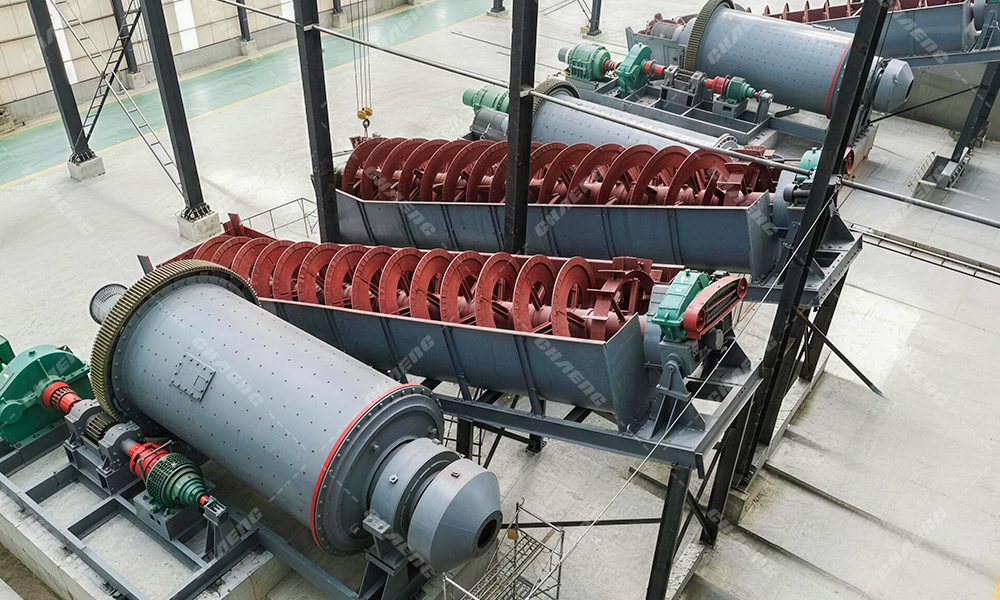
The wet ball mill is the most widely used ball mill type in mineral processing. During grinding, water or a dedicated grinding liquid is added in proportion; the material, steel balls and water are mixed inside the cylinder, and the rotation of the cylinder drives the grinding media to impact and grind the ore. After grinding, the material is discharged from the discharge end in the form of slurry, usually forming a closed circuit with a spiral classifier: coarse particles return to the wet ball mill for regrinding, while fine slurry proceeds to flotation, magnetic separation, leaching and other downstream processes. Wet ball mills are divided into overflow type and grid type. The grid type wet ball mill discharges forcibly, with less over-grinding and larger processing capacity, and is mostly used for coarse grinding; the overflow type wet ball mill discharges naturally by liquid level, producing a finer product size, and is suitable for fine grinding operations.
The dry ball mill adds no liquid throughout the grinding process. Airflow carries away the fine powder, and the finished product is dry powder; the system is equipped with dust removal and powder classification equipment. After the material is impacted and ground by the steel balls inside the cylinder, qualified powder is discharged with the airflow, while coarse material continues to be ground in the mill. Because material flowability inside the cylinder is poor and particles tend to agglomerate and stick to the wall, the grinding efficiency of the dry ball mill is generally lower than that of the wet ball mill under the same conditions.
1. Dust and environmental protection: The wet ball mill grinds with water and produces almost no dust emission, keeping the production environment clean and making it easier to meet mining environmental requirements. The dry ball mill generates a large amount of airborne dust and must be equipped with a high-power pulse dust collector, resulting in higher investment and operating costs for the dust removal system.
2. Grinding efficiency and product size: The slurry in a wet ball mill disperses particles and reduces the agglomeration of fine powder, achieving better mineral liberation and a more uniform size distribution. Under the same installed power, the wet ball mill delivers higher capacity. In the dry ball mill, particles tend to adsorb and agglomerate, the upper limit of grinding fineness is limited, and the size distribution is wider.
3. Supporting process: The wet ball mill discharges slurry, so the downstream section requires dewatering, thickening and tailings water treatment equipment. The dry ball mill directly produces dry powder that can be packed and conveyed without a dewatering process, making it suitable for water-scarce regions.
4. Wear and maintenance: The wet ball mill operates in a corrosive slurry environment for long periods; liners, steel balls and hollow shafts are subject to erosion and corrosion, so wear-resistant and corrosion-resistant materials are required. The dry ball mill mainly suffers dry friction wear, with a lower risk of cylinder corrosion but obvious thermal fatigue loss of liners.
5. Energy consumption structure: The main motor power consumption of the wet ball mill is moderate, and energy use is mainly concentrated in downstream slurry conveying and dewatering. The comprehensive power consumption of the dry ball mill — main machine, fan and dust removal system — is relatively high.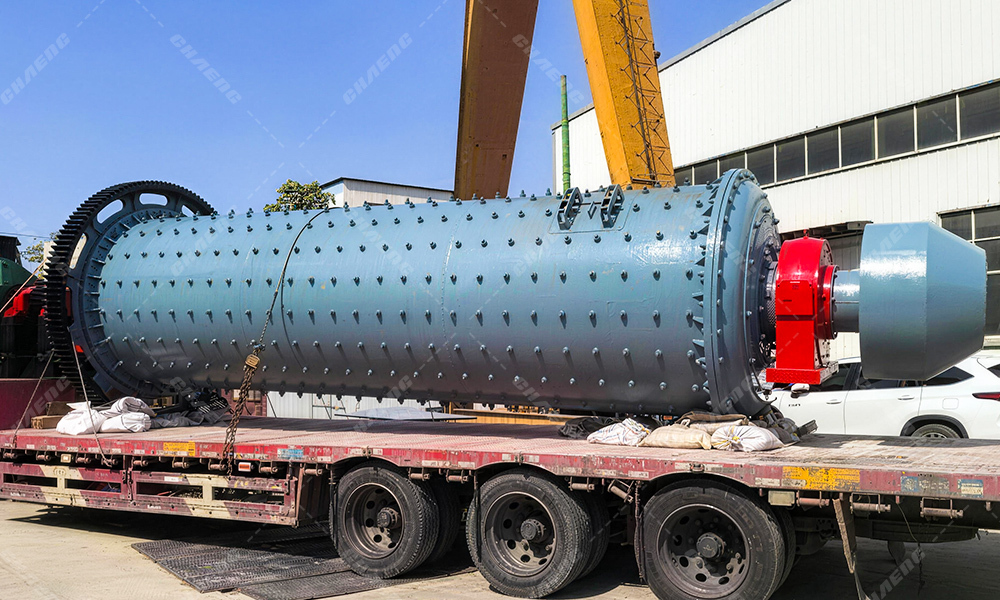
The wet ball mill is the core grinding equipment of mineral processing plants and is preferred for materials that do not hydrate when exposed to water and whose downstream process is wet separation. Metal ores: iron ore, copper ore, gold ore, lead-zinc ore, molybdenum ore, phosphate ore, etc. — flotation, magnetic separation and gravity separation processes almost all use wet ball mills. Non-metallic minerals: kaolin, fluorite, feldspar, quartz sand, barite, etc. — ceramic glaze slurry and coating slurry preparation also uses wet ball mills extensively. Other materials: some chemical raw materials, battery precursor slurries, and wet purification projects of non-metallic minerals.
Materials not suitable for wet ball mills: materials that hydrate, agglomerate or deteriorate when exposed to water, such as cement clinker, quicklime and some lithium battery powders — these should preferentially use dry ball mills. Materials suitable for dry ball mills: cement clinker, slag powder, fly ash, limestone, gypsum, coal, bauxite, etc., where the finished product must be dry powder and cannot contact water; projects in arid and water-scarce regions also consider dry ball mill solutions.
Selecting a wet ball mill requires comprehensive judgment based on material characteristics, process route and site conditions — not just model and output. In wet ball mill project selection, CHAENG focuses on the following indicators:
First, material hardness and abrasiveness. For ores with high hardness and strong abrasiveness, chromium-molybdenum alloy liners or magnetic liners are preferred to extend the service life of wear parts; for soft clay-type ores, the steel ball grading can be adjusted to reduce over-grinding.
Second, feed size and target fineness. For large feed size and coarse grinding, the grid type wet ball mill is preferred; for slurry requiring 325 mesh or finer, the overflow type wet ball mill with a classifier in closed-circuit grinding is selected.
Third, slurry concentration control. Slurry concentration is a key parameter in wet ball mill operation. Conventional mineral processing slurry concentration is controlled at 30%–40%: too high a concentration easily causes blockage, and too low a concentration reduces grinding efficiency. The water-to-material ratio should be adjusted according to ore test data.
Fourth, supporting system planning. When selecting a wet ball mill, reserve space in the early stage for the thickener, hydrocyclone, slurry pump and tailings treatment system, and prepare a wastewater recycling plan to reduce water consumption.
Fifth, equipment support type. Large wet ball mills prefer rolling bearing structures. Compared with traditional bearing-shell wet ball mills, they have a lower starting load and obvious power savings, suitable for processing plants with 24-hour continuous production.
If your production line adopts a wet flotation or magnetic separation process, the material is water-resistant and environmental controls are strict, choose the wet ball mill first: high grinding efficiency and low dust make it the mainstream solution for mines. If the material deteriorates when exposed to water, the finished product must be dry powder, or local water resources are scarce, choose the dry ball mill. Many large-scale production lines also adopt a combined process of wet ball mill coarse grinding followed by dry ultra-fine grinding, balancing capacity and product requirements.
CHAENG (Xinxiang Great Wall Machinery) has been deeply engaged in ball mill manufacturing for decades and can customize overflow type and grid type wet ball mills as well as various dry ball mills, with specifications covering Φ2.2m–Φ5m. Based on customers' ore test reports, site conditions and capacity targets, we provide complete grinding process solutions, including equipment selection, foundation design, installation and commissioning, and one-stop operation and maintenance training. Our wet ball mills adopt new wear-resistant liners and rolling bearing supports for stable operation and low energy consumption, and have been put into stable operation in many iron ore, copper ore and lead-zinc ore dressing projects in China. For different materials, we can optimize the steel ball grading and cylinder structure to improve the overall benefits of the ball mill. If you are not sure whether to choose a wet ball mill or a dry ball mill for your production line, contact the CHAENG technical team for material testing and process calculation to customize a suitable ball mill solution.