17 Mar,2026 UTC+8 Views:
As a modern piece of grinding equipment, the vertical roller mill has seen increasingly widespread application across various industries in recent years. Its distinct advantages—including high efficiency, low energy consumption, and a compact footprint—have established the vertical roller mill as a leader within the grinding industry. This article will delve into the working principles and technical characteristics of the vertical roller mill, as well as the diverse industries in which it can be applied, helping readers gain a comprehensive understanding of this equipment's value and future prospects.
一. Working Principles of the Vertical Roller Mill
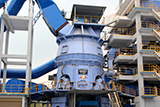
The vertical roller mill is a novel, high-efficiency grinding device primarily composed of grinding rollers, a grinding table (or disc), a feeding mechanism, an air classifier, a reducer, and an electric motor. During operation, raw materials are fed onto the grinding table via the feeding mechanism; after being subjected to compression and grinding by the rollers, they are transformed into a powdered product. As the rollers rotate, the combined forces of gravity and centrifugal force press the materials firmly against the surface of the grinding table, facilitating the grinding process. Simultaneously, an air classifier separates the finished, fine powder from the coarser, unground material, thereby achieving highly efficient classification.
A key feature of the vertical roller mill is that multiple grinding rollers operate simultaneously on the same table, offering a distinct advantage in ensuring the consistency of the final product's particle size. Furthermore, both the diameter of the grinding table and the number of rollers can be customized to meet specific requirements, demonstrating the equipment's excellent adaptability.
二. Technical Advantages of the Vertical Roller Mill
The technical advantages of the vertical roller mill are evident in several key areas:
1. High Efficiency: Compared to traditional ball mills, the vertical roller mill boasts significantly higher grinding efficiency. Its grinding process substantially improves energy utilization rates, thereby reducing the energy consumption per unit of finished product.
2. Energy Conservation and Environmental Protection: The design of the vertical roller mill places a strong emphasis on the efficient use of energy, effectively mitigating the high energy consumption issues associated with traditional equipment. Additionally, the mill's enclosed structure effectively prevents dust leakage, thereby facilitating environmentally friendly production.
3. Compact Footprint: The vertical configuration adopted by the vertical roller mill results in significant space savings. This makes it an ideal choice for enterprises or facilities with limited floor space, such as those operating within confined workshops. 4. Ease of Operation: Vertical roller mills feature a high degree of automation, enabling rapid material feeding and discharge. Their low operational complexity reduces labor costs.
5. Wide Range of Applications: Vertical roller mills are capable of grinding not only standard materials such as cement and ores but also specialized materials—such as gypsum and pulverized coal—demonstrating broad versatility.
三. Applications of Vertical Roller Mills Across Various Industries
1. Cement Industry: In cement production, vertical roller mills are frequently used to grind raw meal and pulverized coal. Their high grinding efficiency and stability under high-moisture conditions make them one of the core pieces of equipment in cement production lines.
2. Mining Industry: In mineral processing, vertical roller mills are widely utilized for grinding ores. By performing fine grinding and classification of ores, these mills enhance mineral extraction rates and increase product value.
3. Power Industry: Vertical roller mills play a crucial role in the preparation of pulverized coal for power plants. Their highly efficient coal-grinding capabilities enable power plants to optimize equipment operational efficiency and reduce fuel consumption.
4. Chemical Industry: Applied to the grinding and preparation of chemical raw materials, vertical roller mills can efficiently process a diverse range of chemical products—such as pigments and coatings—while improving the uniformity of product particle size distribution.
5. Metallurgy Industry: In the metallurgical sector, vertical roller mills are used to process various metal ores and waste materials, thereby reducing pollution during the smelting process and achieving higher ore utilization rates.
6. Building Materials Industry: In the production of building materials, the operational flexibility of vertical roller mills allows them to meet the grinding requirements for a wide variety of materials, including gypsum, bricks, and ceramics.
7. Food Industry: In recent years, vertical roller mills have gradually made inroads into the food industry, where they are used for the pulverization of food products such as grains and sugars, ensuring both product safety and hygiene.
四. Market Outlook and Development Trends
As the global process of industrialization continues to advance, the market demand for vertical roller mills is steadily increasing. Particularly against the backdrop of increasingly stringent environmental regulations, vertical roller mills—distinguished by their superior energy-saving and eco-friendly performance—are poised to be adopted by a growing number of industries.
In the future, the development of vertical roller mills is expected to follow these key trends:
1. **Intelligentization:** Driven by advancements in industrial intelligence, vertical roller mills will gradually incorporate smart monitoring and adaptive adjustment capabilities, thereby enhancing both production efficiency and operational safety.
2. **Material Innovation:** The incorporation of new materials will significantly boost the wear resistance and service life of the vertical roller mill's main structure, helping enterprises effectively reduce equipment maintenance costs.
3. **Multifunctionality:** The development of more versatile vertical roller mills—capable of processing multiple types of materials using a single unit—will emerge as a critical future direction, aimed at meeting the diverse needs of various clients.
4. **Inter-industry Integration:** Collaboration across different industries will be further strengthened; vertical roller mills will be effectively integrated and synchronized with other machinery to form highly efficient production lines.
Given the widespread demand across numerous sectors, vertical roller mills are undoubtedly set to occupy an increasingly pivotal position in the future market. Through continuous optimization and innovation, these mills not only elevate product quality and production efficiency but also foster the healthy and sustainable development of related industries.
In summary, as a highly versatile and advanced grinding technology, the vertical roller mill possesses immense potential for application across a wide spectrum of industries, making it a subject worthy of in-depth attention and research by all relevant sectors.
Pre: How can Great Wall Machinery effectively save electricity in ball mills?
Next: Austrian Xiao Group Delegation Visits Great Wall Group